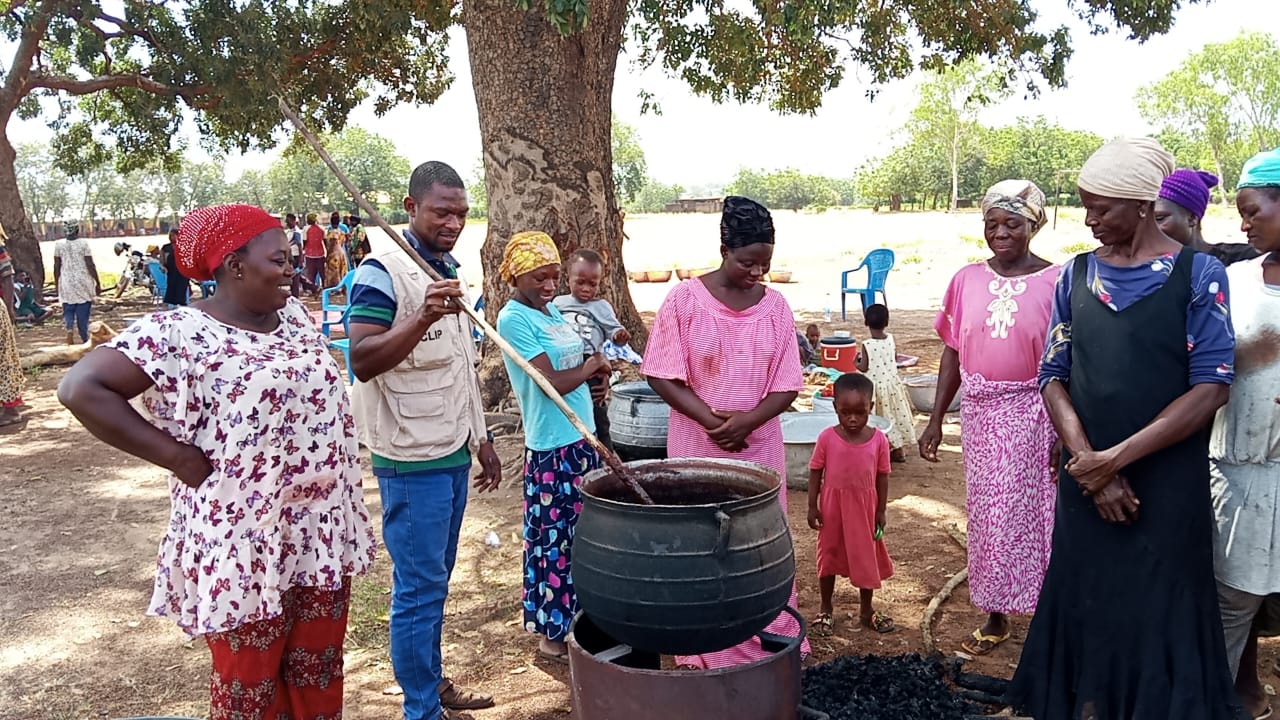
The Changing Lives in Innovative Partnerships (CLIP) Ghana has trained 45 women from two beneficiary groups in quality shea butter processing in the Lambussie District of the Upper West Region as part of efforts to strengthen women’s economic empowerment and build resilient livelihoods in vulnerable cross-border communities.
The three-day training, which took place from October 28 to 30, 2026, was organised under the ACTIF Project, officially known as the Project to Support Cross-Border Communities Vulnerable to Insecurity and Fragility.
The project seeks to support populations affected by the Sahel crisis in Northern Guinea, Côte d’Ivoire, Ghana, Togo and Benin, with an overall objective of ensuring the socio-economic resilience of cross-border areas in the face of the regional security crisis.
Speaking in an interview with James Baba Anabiga, host of the Morning Show on Lambussie FM, Mr. Sayibu Mohammed Alhassan, Programmes/Technical Adviser at CLIP Ghana, explained that the training was organised following a direct request by the beneficiary groups.
He emphasised that CLIP Ghana does not impose capacity-building interventions on beneficiaries. Instead, the organisation allows them to identify and choose the areas in which they require support, after which it facilitates the engagement of qualified resource persons or institutions to provide the necessary training.
According to him, the women specifically requested training in quality shea butter processing, which informed the organisation’s decision to facilitate the intervention.
Following the training, CLIP Ghana provided the beneficiaries with essential working tools and equipment, including roasters, basins, pots and other materials required for shea butter production. Additionally, each of the 45 women received cash support of GH¢1,000 to complement the equipment provided and strengthen their capacity to engage in the business.
Mr. Alhassan explained that the intervention is primarily aimed at empowering women economically throughout the year by creating sustainable livelihood opportunities, increasing their income levels and improving their financial independence.
He expressed satisfaction with the initial outcomes of the training, indicating that almost all the beneficiaries had started processing shea butter, suggesting that the women were already translating the knowledge and skills acquired into practical economic activities.
However, he identified access to markets as a major challenge confronting the beneficiaries. He noted that although the women had demonstrated enthusiasm in putting their newly acquired skills into practice, finding reliable markets for their products remained a concern.
He said CLIP Ghana was exploring possible ways of connecting the women to markets to enable them to sell their products, generate sustainable income and derive maximum benefits from the intervention.
Beyond the economic empowerment component, Mr. Alhassan reiterated CLIP Ghana’s commitment to promoting peaceful coexistence among communities, particularly those located along Ghana’s borders.
He called on all stakeholders, traditional authorities, community leaders, youth groups, women and residents of border communities to support initiatives aimed at sustaining peace and strengthening social cohesion.
He stressed that peaceful coexistence was essential to achieving sustainable development, particularly in communities exposed to insecurity and other vulnerabilities associated with the regional security situation.
The ACTIF Project is being implemented through a partnership involving CLIP and Acting for Life, with support from the Centre for Crisis and Support under the French Ministry for Europe and Foreign Affairs.