The SNV-implemented Healthy Futures for All (HF4A) Project has highlighted significant progress in access to water, sanitation and hygiene facilities in the Nandom Municipality and Lambussie District, while drawing attention to persistent gaps that require urgent attention.
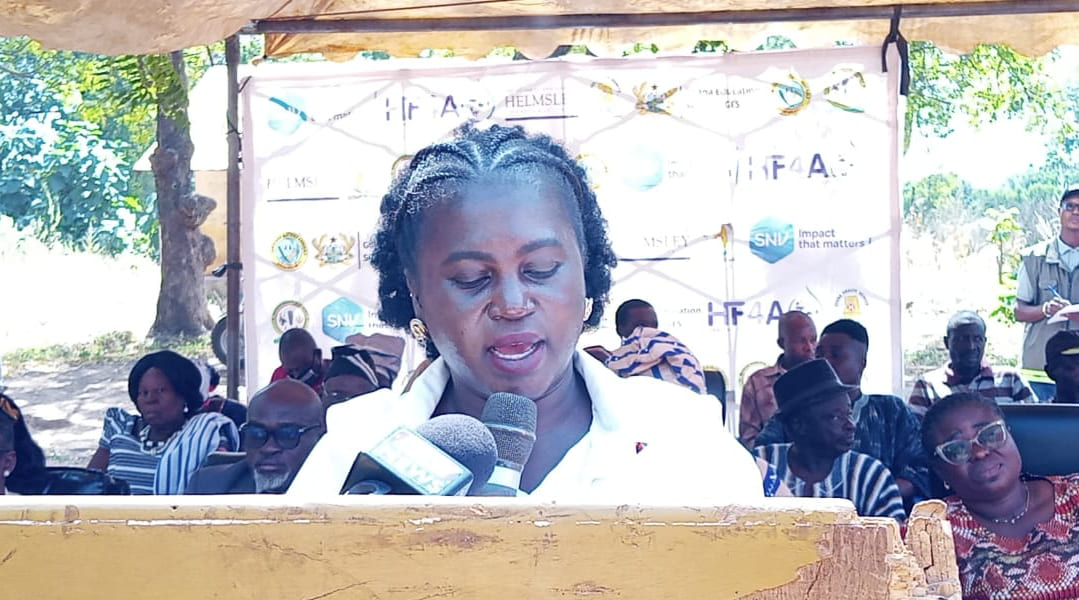
Speaking at the 2026 World Toilet Day celebration held at Nandom Brutu Primary School on Thursday, November 19, 2026, the Project Manager of the HF4A Project, Theresa Swanzy Baffoe, emphasised that improving access to sanitation should not be the sole responsibility of government and development organisations, but requires active participation from the private sector as well.
Under the theme, “Safe Toilets. Equal Futures,” she explained that SNV, through the HF4A Project, had partnered with the Nandom Municipal and Lambussie District Assemblies to improve access to safe sanitation and hygiene services.
She disclosed that the project had constructed and handed over 50 boreholes fitted with hand pumps, provided 24 solar-powered limited mechanised water systems, 32 gender-friendly sanitation facilities and more than 500 handwashing stations across schools, communities and healthcare facilities in the two districts.
Additionally, the project had rehabilitated 80 community boreholes and strengthened the capacities of 75 Water and Sanitation Management Teams (WSMTs) and district-level WSMT structures in Nandom and Lambussie.
Beyond infrastructure development, Mrs Baffoe said the project had invested in local skills development by training 16 area mechanics and artisans to repair faulty boreholes and construct climate-resilient household toilet facilities.
She further revealed that women had been trained and supported in the production of reusable sanitary pads, while more than 200 women had received training in soap and detergent production to promote access to hygiene products and create economic opportunities.
However, presenting findings from baseline and endline assessments conducted in March 2022 and March 2025 respectively, Mrs Baffoe noted that despite the gains, significant sanitation and hygiene challenges remained, particularly in Lambussie.
At the household level, the proportion of households without toilet facilities or practising open defecation in Nandom declined significantly from 37.31 percent in 2022 to 6.92 percent in 2025.
In contrast, Lambussie recorded an increase from 50.18 percent to 56.40 percent within the same period, indicating a worsening household sanitation situation.
Access to adequate drinking water in schools was another challenge, as 79.4 percent of schools in Lambussie and 51.1 percent in Nandom were found to have insufficient quantities of drinking water.
At the healthcare facility level, the assessment showed some progress in water quality, with more than 93 per cent of facilities in both districts achieving basic and acceptable water quality standards by 2025.
However, the availability of permanent handwashing facilities remained a concern, with the proportion of healthcare facilities having such facilities declining to 53.6 percent in Lambussie and 40.7 percent in Nandom.
The findings underscore the need for sustained investments, stronger institutional collaboration and increased community participation to address sanitation and hygiene gaps.
Mrs Baffoe’s address reinforced the importance of collective responsibility in ensuring that every household, school and healthcare facility has access to safe toilets, adequate water and proper hygiene facilities, in line with the call for safe toilets and equal futures for all.