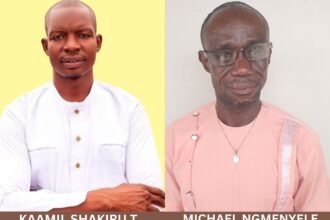

The Lambussie Constituency Organizer of the National Democratic Congress (NDC), David Boon, has called for deliberate and sustained investment in science and mathematics education in the Upper West Region to improve the region’s chances of winning the National Science and Maths Quiz (NSMQ) trophy.
According to Mr. Boon, although Senior High Schools in the region have demonstrated strong potential and have reached the NSMQ finals on two occasions, the region has been unable to convert its performances into a championship victory over the past 33 years.
Speaking on the issue, he attributed the challenge partly to inadequate educational infrastructure, particularly the lack of well-equipped science and computer laboratories in many Senior High Schools across the region.
 Mr. Boon argued that the region must move beyond last-minute preparations for the competition and establish a deliberate system of identifying and nurturing talented students from an early stage.
“Preparation is a process and not an event,” he stressed.
He proposed the introduction of quiz competitions at the basic school level through to Senior High School, coupled with deliberate training of quiz masters and quiz mistresses to equip them with the skills required to prepare students for national competitions.
He said such a structured approach would help build a strong pipeline of talented students capable of competing successfully at the national level.
Abubakari calls for early preparation and alumni support
The Deputy Secretary for Lambussie of the New Patriotic Party (NPP), Mr. Abubakari Abdul-Moomin, also expressed optimism that a school from the Upper West Region would eventually lift the coveted NSMQ trophy.
“We are hoping and praying that one day a school from the Upper West Region will also lift the trophy,” he said.
 Mr. Abubakari maintained that the region is not short of intelligent students, but continues to face challenges with the availability and functionality of science laboratories.
He noted that even in schools where laboratories exist, the inability to consistently provide chemicals and other materials needed for practical work affects students’ preparation.
He compared the situation to well-performing schools in the southern part of the country, citing schools such as Presbyterian Boys’ Secondary School (PRESEC), Legon, where students have access to the facilities and resources necessary to support their preparation for the competition.
Mr. Abubakari therefore called for the engagement of dedicated NSMQ coaches who would identify potential contestants and begin preparing them well ahead of the competition, rather than relying on two or three months of preparation.
He also appealed to old students of Senior High Schools in the Upper West Region to emulate the support systems provided by alumni groups in the southern sector.
According to him, stronger alumni involvement in funding, infrastructure and academic preparation could help schools overcome some of the challenges confronting them and improve their chances of winning the NSMQ trophy.
St. Augustine’s Old Boys’ support cited as an example
The calls from the two Lambussie-based political actors come at a time when the power of alumni support in NSMQ success has once again come into focus.
A JoyNews publication dated September 10, 2026, reported that old students of St. Augustine’s College had presented a GH¢120,000 motivational package to the school’s NSMQ finalists ahead of the final.
The development has been cited as an example of how old students can mobilise resources and provide additional motivation and support to their alma mater when competing at the highest level.
For Mr. Boon and Mr. Abubakari, similar commitment from old students of schools in the Upper West Region could help bridge resource gaps and create a stronger foundation for NSMQ success.
Pledge support for Sharp Brains Quiz
Both Mr. Boon and Mr. Abubakari also pledged their support for the upcoming Sharp Brains Quiz Competition, being organised by Lambussie FM.
The initiative is expected to provide an opportunity for students to develop their knowledge, confidence and competitive skills while encouraging a stronger culture of academic quizzes within schools.
They believe competitions of this nature, when sustained from the basic school level through Senior High School, could contribute to identifying and developing the next generation of NSMQ contestants from the region.